
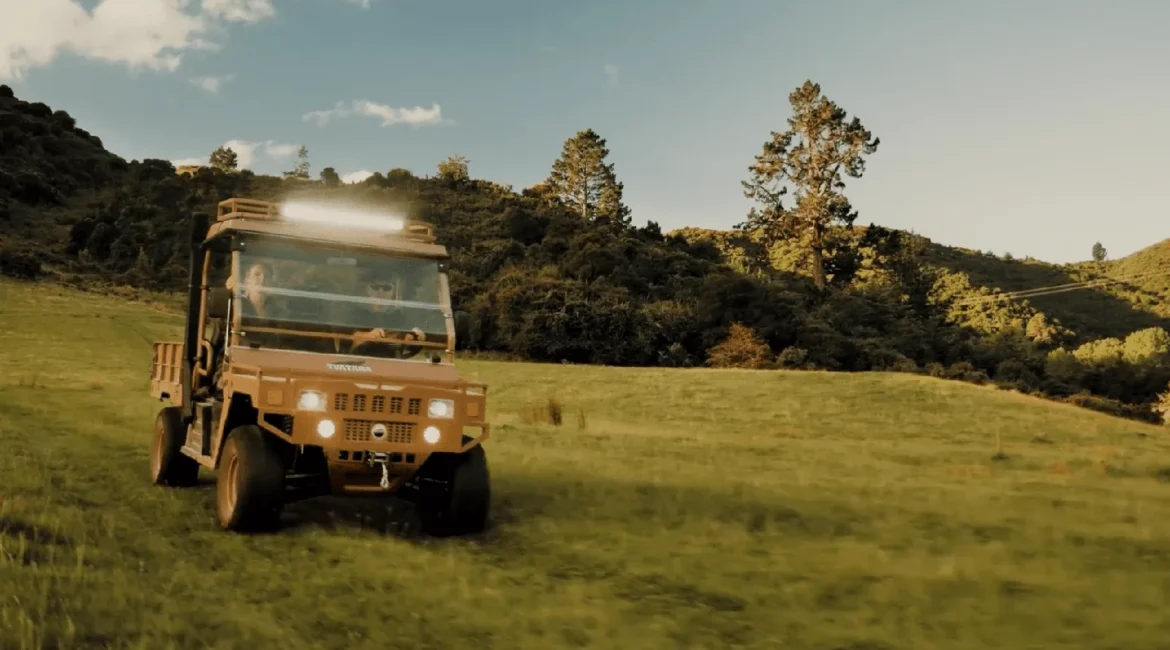
Choosing between an electric and petrol utility terrain vehicle is less about finding one universally better option and more about matching the vehicle to the work. Route length, shift pattern, charging access, refuelling arrangements, payload, terrain and site rules all influence the right decision.
This guide compares the main ownership and operating considerations for businesses evaluating an electric or petrol side-by-side UTV.
Start with the daily operating pattern
Document how the UTV will actually be used before comparing specifications. Estimate the distance travelled per shift, the number of stops, typical speed, terrain, passenger count, cargo weight and towing demand. A vehicle used for short, repeatable property-maintenance routes has a different duty cycle from one that spends a full day moving people and equipment across remote terrain.
It is also worth identifying when the vehicle is idle. Regular overnight or between-shift downtime can make electric charging straightforward. Unpredictable schedules or work far from reliable power may make rapid petrol refuelling more practical.
Range, charging and refuelling
Electric range varies with payload, gradients, tyre pressure, driving style, auxiliary equipment and environmental conditions. Compare the stated maximum range with the most demanding realistic shift, then retain a sensible operating margin. The eTuatara electric UTV has a stated maximum range of up to 160 km, subject to driving conditions.
Charging planning should cover power availability, charger location, cable management, charge time and responsibility for connecting the vehicle. Where a site already has suitable electrical infrastructure and predictable downtime, charging can become part of the normal shift routine.
Petrol UTVs can be returned to service quickly where approved fuel storage and refuelling procedures are already in place. For remote work, consider how fuel will be transported, stored and controlled rather than looking only at tank capacity.
Maintenance and running-cost factors
Electric drivetrains remove several petrol-engine service items, including engine oil, intake and exhaust-system maintenance. Ownership costs still include tyres, brakes, suspension, inspections, electrical components and battery care. Regenerative braking may reduce friction-brake use in suitable conditions, but it does not remove the need for normal brake inspection.
Petrol vehicles have familiar servicing requirements and can suit businesses with established workshop capability and fuel logistics. Compare service intervals, parts support, downtime and warranty coverage rather than treating fuel price as the only cost.
Noise, emissions and work environment
Lower operating noise can be valuable around livestock, workers, guests and communication-sensitive areas. Electric drive also removes tailpipe emissions at the vehicle, which may support sustainability objectives and improve suitability for some controlled environments. Site ventilation, risk assessment and local rules still need to be considered for every application.
Petrol remains useful where long or irregular shifts, remote refuelling and high utilisation make charging difficult. The decision should be based on the complete operating environment, not on a single environmental or performance claim.
Capability, payload and towing
Compare passenger capacity, tray dimensions, cargo rating, towing capacity, ground clearance, tyres, suspension and drivetrain controls. Accessories consume payload and can change weight distribution, so include dog boxes, cages, tools, radios and other fitted equipment in the calculation.
The Tuatara range includes selectable 2WD and 4WD and is designed for demanding off-road use. Review the detailed petrol Tuatara UTV and electric eTuatara UTV specifications against the intended terrain and load.
What about mine-spec vehicles?
Mining and industrial sites may require isolators, high-visibility markings, UHF radio, external jump points, fire extinguisher, reversing alarms, protective components and specific documentation. Requirements vary by site, so a standard vehicle should not be assumed to be compliant. Compare the available mine-spec electric UTV configuration and confirm the current site standard before ordering.
A practical decision checklist
- Record the longest realistic shift distance and operating hours.
- Confirm charging availability or approved fuel logistics.
- Calculate passengers, cargo, accessories and towing demand.
- Compare terrain, tyres, clearance and drivetrain requirements.
- Review servicing, parts, warranty and expected downtime.
- Confirm any mine, industrial or client-specific compliance rules.
For deeper research, read the electric UTV charging and running-cost guide and the petrol UTV buying guide. You can also contact Wing Gear to discuss the duty cycle and equipment required for your application.